
M&A financial model
Comprehensive details to model the transaction, financing, tax and accounting assumptions over an asset whose cost and production you have already modelled.
What M&A does
The M&A model is designed for transactions on existing or consented assets. It covers all critical areas, including financing, energy generation, power pricing, tax, capital allowances, and cash flow, ensuring a robust foundation for equity valuation.
This model provides greater detail than the pre-FID version where deals are won or lost. It manages complex factors like tax treatments and working capital precisely, while integrated sensitivity grids allow you to stress-test price, availability, and discount rates instantly.
A dedicated time series editor manages annual variables such as power prices and inflation. This preserves the unique profile of your data, avoiding the inaccuracies inherent in using forced averages.
Assumptions are managed via named scenarios. You can host bid, vendor, and lender cases within a single project, allowing for direct line-by-line comparison while maintaining distinct results for each.
Live · Demonstration project
£677m
Total value, levered — equity plus debt
Equity plus debt, against the 8% unlevered case — leverage is worth £55m here
What you get with M&A
-
Transaction structure and financing
Proposed transaction and indicative financing modelled explicitly — consideration, debt sizing, gearing and the cash and equity flows to ensure price and the structure are tested together.
-
Tax, allowances and the balance sheet
Capital allowances, opening balance sheet, opening finance leases and working capital fully accounted for, as the assumptions that influence valuation.
-
Revenue that reflects the market
Power prices, renewable obligation certificates and inflation factors, with a time series editor for inputs that change year-by-year.
-
Availability as an input, not a hope
Turbine availability modelled alongside generation, and traceable to the OPEX scenario and energy yield calculation. This ensures that the valuation is using the same, shared data source.
-
Sensitivities and discount rates
A structured sensitivity chapter and explicit discount rate assumptions, so the range around the headline number is calculated instantly within the model.
-
Scenarios per counterparty
Bid, vendor, base and downside cases as named scenarios with their own stored results, comparable side by side.
M&A in use
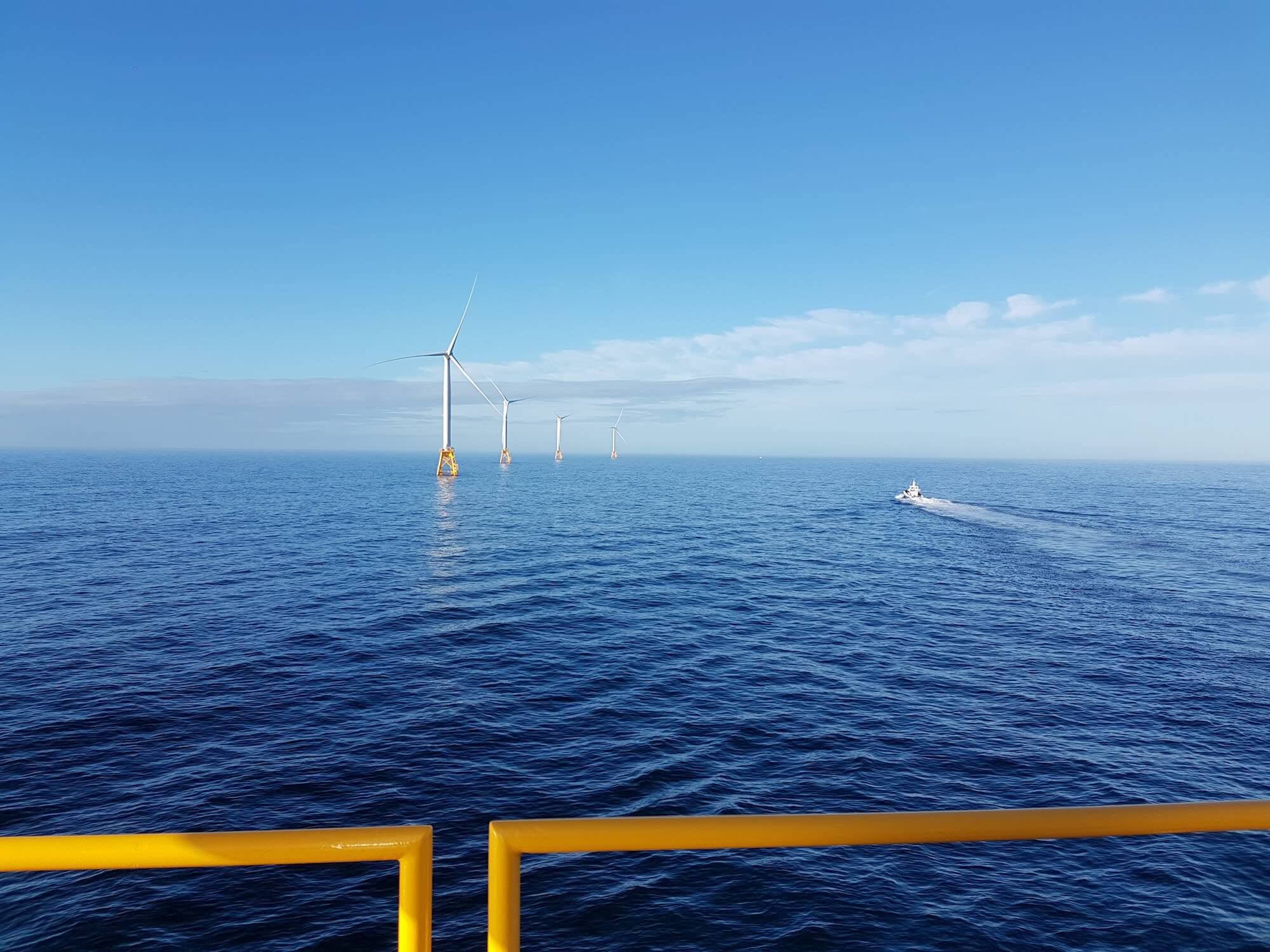
Drawn in the product's own interface, and every figure is real: they come from our live Demonstration project — a 288.75 MW floating wind farm in the central North Sea — and its Default Scenario, so anything shown here can be reproduced in front of you. No client or commercial data appears on this page.
The transaction, modelled as a transaction
Stake, valuation date, financing and the opening balance sheet are inputs in their own right — not adjustments made to a project model after the fact. This run values a 49% stake in the operating asset from a 30 June 2020 valuation date.
Proposed transaction
Proposed transaction
GBPIndicative financing
HoldCo levelUnlevered to levered
£m| Unlevered enterprise value, at 8.00% | 622.03 |
| Equity NPV, levered, at 10.00% | 262.13 |
| HoldCo debt raised | 414.77 |
| Total value, levered — equity plus debt | 676.90 |
| Gain from leverage, against the unlevered case | 54.87 |
Leverage is worth £54.87m of total value here, and the equity that remains after servicing it is worth £262.13m discounted at 10.00%. Both numbers move when the debt does, which is why the financing sits in the model rather than beside it.
Revenue with its shape kept
Electricity, ROCs and REGOs are three revenue streams with three different indexation paths and three different end dates. Averaging them into one price per MWh is how a valuation loses the thing it was supposed to be testing.
Revenue, operating cost and cover
| Line | 2021 | 2022 | 2023 | 2024 | 2025 | 2026 |
|---|---|---|---|---|---|---|
| Net generation, MWh P50, after 0.2% curtailment | 1,115,739 | 1,115,739 | 1,115,739 | 1,115,739 | 1,115,739 | 1,115,739 |
| Electricity revenue | 45.08 | 48.04 | 51.41 | 52.87 | 54.19 | 55.05 |
| ROC revenue 2 ROCs/MWh, fixed at £55.055 from 1 Apr 2027 | 120.67 | 123.98 | 127.39 | 130.90 | 134.50 | 138.20 |
| REGO revenue | 0.39 | 0.40 | 0.41 | 0.41 | 0.42 | 0.43 |
| Operating cost | -34.83 | -33.05 | -32.64 | -33.77 | -31.95 | -31.69 |
| Adjusted EBITDA | 131.31 | 139.37 | 146.57 | 150.41 | 157.16 | 161.99 |
| HoldCo DSCR | 2.84× | 2.84× | 2.85× | 2.86× | 2.85× | 2.85× |
Where the revenue comes from
Share of total, by year| Year | Total, £m | Electricity / ROC / REGO | Support share |
|---|---|---|---|
| 2021 | 166.14 | 72.9% | |
| 2022 | 172.42 | 72.1% | |
| 2023 | 179.21 | 71.3% | |
| 2024 | 184.18 | 71.3% | |
| 2025 | 189.11 | 71.3% | |
| 2026 | 193.68 | 71.6% |
Around three quarters of revenue is support, and the ROC recycling and buy-out prices are separate inputs with their own indexation — so the date that support ends is one of the most consequential assumptions in the model, and it is visible rather than buried in a blended price.
See it on your own project
Book a demo and we will walk through the module with your numbers, not ours.
More of the toolkit
Turbine Technical Due Diligence
Ten structured tools for turbine diligence, each answer tied to the document it came from.
Custom data sources
One library of reference data behind every model, so two scenarios can never mistakenly use different vessel day rates.
Knowledge base
Your project documents, indexed and categorised, feeding the assistant and every diligence workspace that needs evidence.